

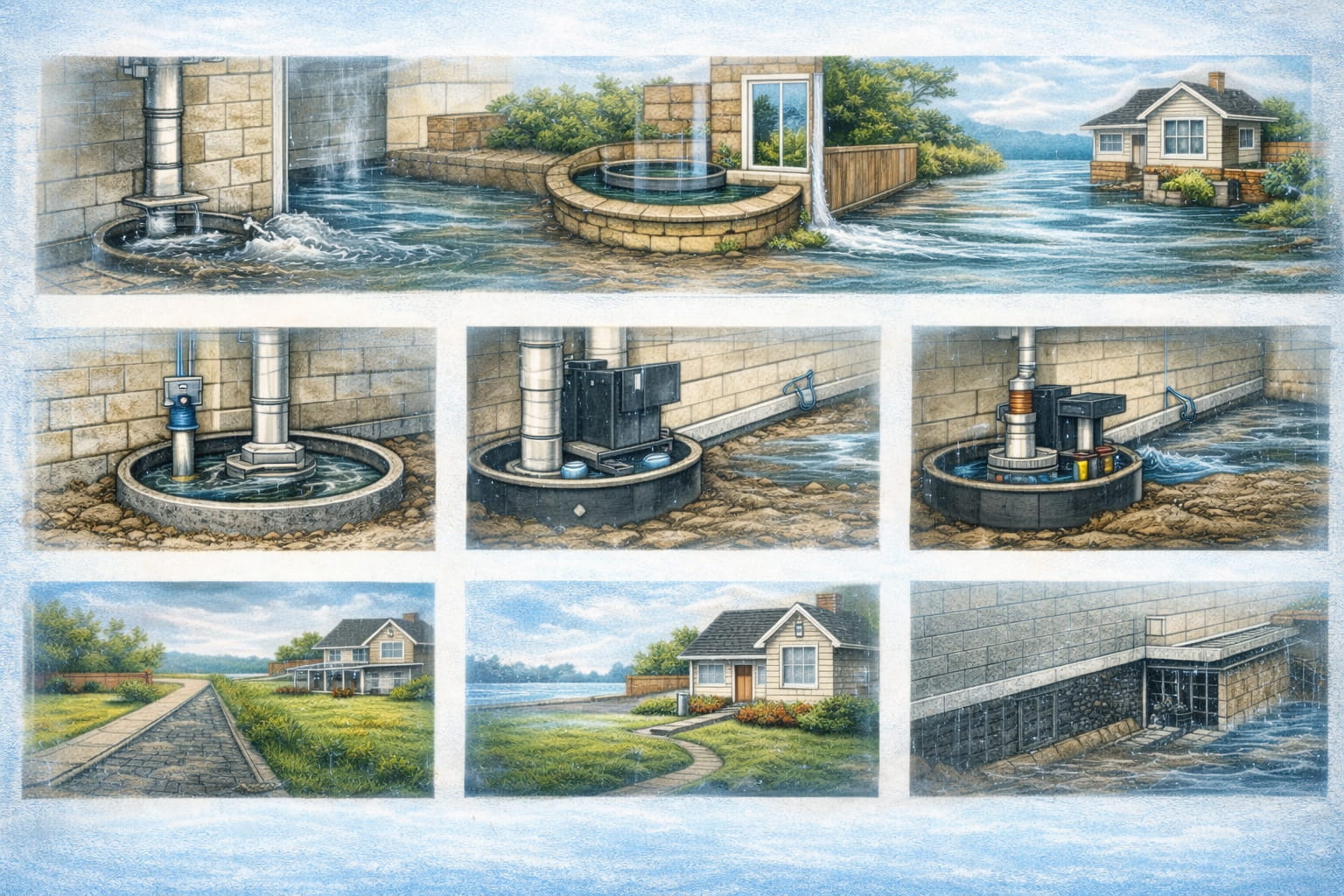
How to Prevent Basement Flooding in Mississauga — The Homeowner’s Guide
Basement flooding is one of the most financially devastating home emergencies a Mississauga homeowner can face. A single flooding event can cause tens of thousands of dollars in damage to finished basements, mechanical systems, and personal belongings — and the disruption of displacement and repairs can last weeks or months. Yet the majority of basement flooding incidents are preventable with the right combination of drainage maintenance, flood protection devices, and proactive inspection.
This guide covers the most common causes of basement flooding in Mississauga and the surrounding GTA, the protection measures that are most effective, and the government subsidy programs available to Mississauga homeowners who want to reduce their flood risk.
Why Mississauga Homes Are Particularly Vulnerable
Mississauga’s geography and the age of its housing stock create specific flood risk factors that many homeowners aren’t fully aware of. Much of the city was developed rapidly through the 1960s, 70s, and 80s, meaning a large proportion of homes have aging drainage infrastructure — original clay tile sewer laterals, aging weeping tile systems, and in many cases no backwater valve protection at all.
The city also sits within a regional drainage basin that experiences significant stormwater volume during heavy rain events. Mississauga has invested substantially in sewer infrastructure upgrades, but combined sewer systems — where stormwater and sanitary sewage share the same pipe — still exist in parts of the city, creating backflow risk during peak storm events.
The Most Common Causes of Basement Flooding
Sewer Backup
During heavy rainfall, municipal sewer systems can become overwhelmed. When this happens, sewage can flow backward through the sewer lateral connecting your home to the main — a process called sewer backup. It enters the home through the lowest point in the drainage system, which is typically a basement floor drain or ground-level toilet. Sewer backup flooding is particularly unpleasant because the water carries raw sewage contamination that requires professional remediation.
Surface Water Entry
Water from rainfall or snowmelt that pools against the foundation and finds entry points through cracks, window wells, or gaps around utility penetrations is called surface water intrusion. This is distinct from sewer backup and requires different protective measures — primarily improving grading, extending downspouts, and sealing foundation penetrations.
Weeping Tile Failure
Weeping tile is the perforated drainage pipe that runs around the perimeter of your foundation to collect and redirect groundwater. In older Mississauga homes this is often original clay tile that has deteriorated, collapsed, or become blocked with root intrusion and sediment. When weeping tile fails, groundwater that would otherwise be redirected away from the foundation instead accumulates against the foundation wall and eventually finds its way inside.
Sump Pump Failure
Homes with a sump pit rely on the sump pump to actively remove groundwater that collects in the pit before it can rise to the level of the basement floor. Sump pump failure during a heavy rainfall event — due to power outage, mechanical failure, or a pump that has reached the end of its service life — is one of the most common causes of basement flooding in Mississauga. A battery backup sump pump is a worthwhile investment in any home that relies on a sump for flood protection.
The Most Effective Prevention Measures
Backwater Valve Installation
A backwater valve is a one-way valve installed in your basement floor on the sewer lateral. When the sewer system backs up, the valve’s flap closes automatically, preventing sewage from entering your home. This is the single most effective protection measure against sewer backup flooding. Once installed, a backwater valve requires minimal maintenance — an annual inspection to confirm the flap moves freely and is free of debris.
Sump Pump Upgrade and Battery Backup
If your home has a sump pit, ensure the pump is no more than 7–10 years old and is appropriately sized for your home’s groundwater load. Add a battery backup pump that activates automatically if the primary pump fails or loses power — this single addition prevents the most common scenario where a heavy rain event that overwhelms drainage also causes a power outage at exactly the worst moment.
Exterior Grading and Downspout Management
The ground around your foundation should slope away from the house at a minimum of one inch per foot for the first six feet. If your yard has settled over the years and now slopes toward the foundation, adding topsoil and regrading is a cost-effective preventive measure. Extend all downspouts at least six feet from the foundation using above-grade extensions or underground redirects that discharge to a dry well or municipal drain.
Foundation Waterproofing
For homes with a history of water intrusion through foundation walls, interior or exterior waterproofing provides the most robust long-term protection. Exterior waterproofing involves excavating around the foundation, applying waterproof membrane coating, installing drainage board, and replacing the weeping tile system. Interior waterproofing systems manage water that enters the foundation and redirect it to the sump pit before it can spread across the basement floor.
Available Subsidies for Mississauga Homeowners
The City of Mississauga and the Region of Peel both administer programs that provide financial assistance to homeowners installing flood protection devices. These programs change periodically, so confirm current eligibility requirements directly with the city, but the general framework includes:
- Subsidy for backwater valve installation — typically covering 50-80% of installation cost up to a specified maximum
- Subsidy for sump pump installation in eligible homes
- The City of Toronto’s Basement Flooding Protection Subsidy Program provides up to $3,400 for homes in Toronto properThese subsidies make flood protection installation significantly more accessible for homeowners who might otherwise defer the expense. ExpressRooter’s licensed plumbers have extensive experience with subsidy program requirements and can ensure your installation meets the specifications required for reimbursement.
When to Call a Professional
- A professional plumbing assessment is the most reliable starting point for any homeowner who is concerned about flood risk but unsure where their vulnerability lies. A drain camera inspection of the main sewer lateral will reveal root intrusion, pipe damage, or blockages that indicate elevated backup risk. A review of your sump system and weeping tile condition will identify whether these protection systems are functioning adequately.
ExpressRooter provides comprehensive basement flooding assessments and protection installations across Mississauga and the GTA. Call 416-233-2660 or book online for a free quote on backwater valve installation, waterproofing, or a drainage camera inspection.