


Backwater Valve Installation in Toronto — What You Need to Know
If you own a home in Toronto and haven’t installed a backwater valve, your basement is exposed to one of the most damaging and unpleasant flooding risks a homeowner can face: municipal sewer backup. During heavy rainfall events, the City of Toronto’s sewer system regularly becomes overwhelmed, and when it does, sewage can flow backward through the lateral pipe connecting your home to the main sewer — entering your basement through floor drains, toilets, or any other low-point fixture.
A backwater valve eliminates this risk entirely. It’s one of the most cost-effective single investments a Toronto homeowner can make in their property, and the City currently subsidises a significant portion of the installation cost for eligible homeowners. Here’s everything you need to know.
How a Backwater Valve Works
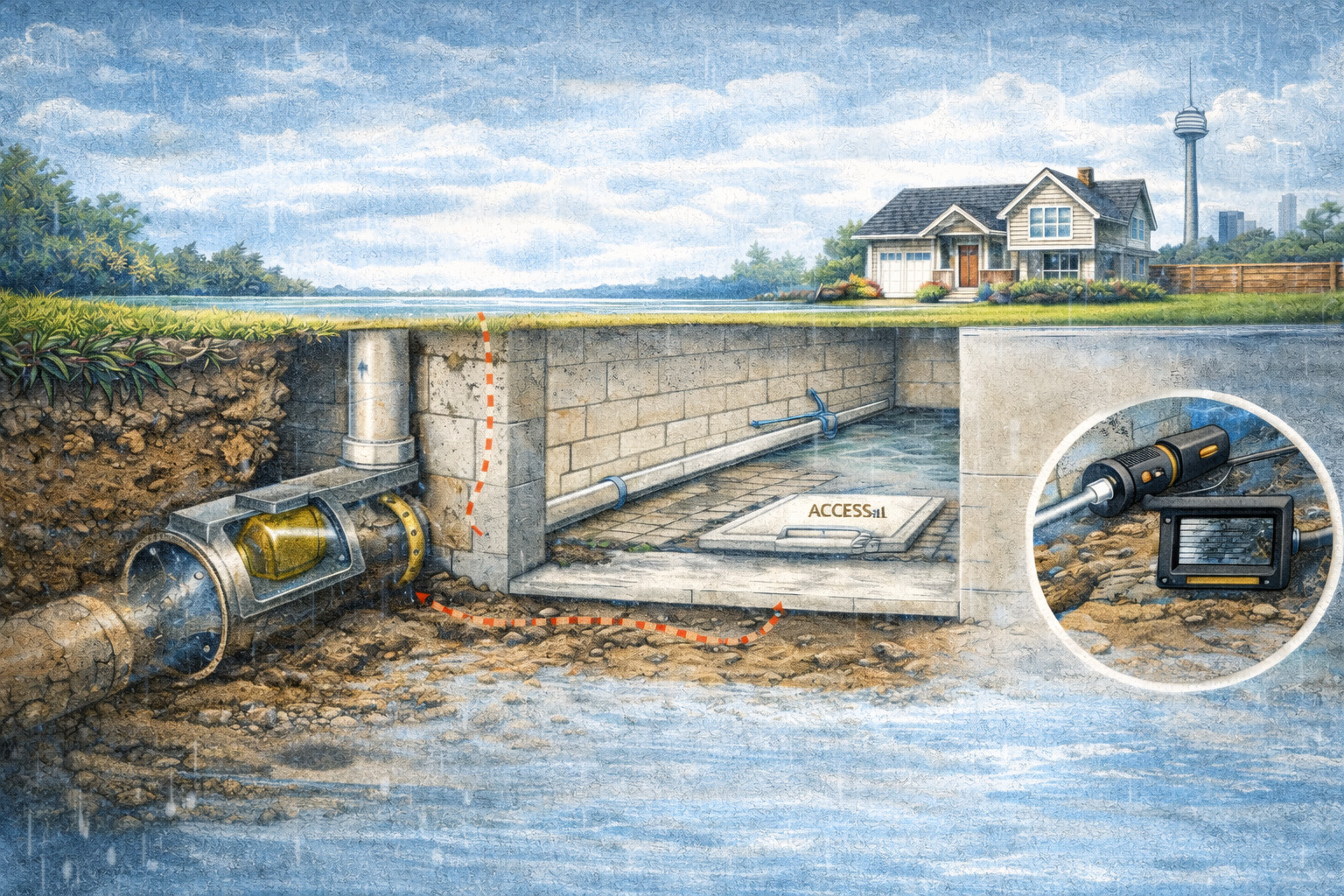
A backwater valve — also called a backflow prevention valve or sewer check valve — is a mechanical device installed in the main sewer lateral pipe inside your basement floor. It contains a floating flap or gate that remains open under normal conditions, allowing waste from your home to flow normally into the city sewer.
When the city sewer backs up and flow reverses, the pressure of the returning sewage pushes the flap closed automatically, sealing the pipe and preventing any sewage from entering your home. When the backup subsides and flow normalises, the flap opens again on its own. The entire process is passive — no electricity required, no manual operation needed.
Do You Already Have One?
Many Toronto homeowners are unsure whether their home has a backwater valve installed. The most common indicator is a rectangular access panel set into the basement floor — typically about 12 inches square — with a small bolt or screw lid. If you see this, you likely have a backwater valve beneath it. If your basement has a finished floor with no visible access panel, or if your home is older and was never retrofitted with one, you may not have this protection.
A licensed plumber can confirm the presence and condition of a backwater valve during a basic inspection. This is worth doing even if you believe you have one, as valves in older homes may not have been serviced in years and can become obstructed with debris or sediment that prevents the flap from closing fully.
The Installation Process
Backwater valve installation is a relatively straightforward plumbing job for a licensed professional, typically completed in a single day. The general process involves:
- Locating the main sewer lateral in the basement floor
- Cutting into the concrete floor to expose the pipe
- Installing the valve housing and valve assembly into the pipe
- Connecting the access panel flush with the finished floor
- Restoring and patching the concrete around the installation
The work requires a permit in Toronto, and the completed installation must be inspected and approved by the city. ExpressRooter handles the permit application, the installation, and the inspection coordination as part of the service — homeowners don’t need to manage any of this independently.
The City of Toronto Subsidy Program
The City of Toronto’s Basement Flooding Protection Subsidy Program provides eligible homeowners with up to $3,400 toward the installation of qualifying flood protection devices, which includes backwater valve installation. The program applies to owners of single-family, duplex, and triplex residential properties.
To qualify, the work must be performed by a licensed plumber, permits must be obtained, and the city must inspect and approve the installation. The subsidy is paid after installation — homeowners pay for the work upfront and then submit documentation for reimbursement.
Given that a standard backwater valve installation in Toronto typically costs between $1,500 and $3,000 depending on access conditions, the subsidy can cover the majority or even the entirety of the installation cost. This makes delaying protection — and remaining exposed to the risk of a sewer backup flooding event — difficult to justify economically.
Maintaining Your Backwater Valve
Once installed, a backwater valve requires minimal ongoing maintenance but should not be entirely ignored. An annual inspection — which involves opening the access panel, visually confirming the flap is clean and moves freely, and clearing any debris — takes less than 10 minutes and ensures the valve will perform when needed. ExpressRooter recommends this check as part of the spring and fall maintenance routine, and it’s included in the annual Home Protection Plan visits.
What About Sewage Backup Insurance?
Many Toronto homeowners add sewer backup coverage as a rider to their home insurance policy. It’s worth reviewing your current policy to understand what is covered and under what conditions. Installing a backwater valve may reduce your insurance premium — some insurers offer discounts for homes with verified flood protection devices — and will generally strengthen your position if you do ever need to file a claim, as it demonstrates proactive risk management.
ExpressRooter installs backwater valves across Toronto and the GTA with full permit and inspection service. Call 416-233-2660 for a free quote. We’ll confirm your subsidy eligibility and handle all paperwork.