


5 Plumbing Upgrades That Help Seniors Stay at Home Safely
The decision to age in place — to remain in a cherished, familiar home rather than transitioning to assisted living — is one that more and more GTA families are making together. Ontario’s senior population is the fastest-growing demographic in the province, and the vast majority of seniors, when asked, express a strong preference to remain in their own homes for as long as possible.
What most families don’t fully appreciate is how many practical home modifications can make that goal both safer and more realistic. Plumbing modifications in particular address some of the highest-risk areas for falls and injury in the home — the bathroom, which is statistically the most dangerous room for seniors, is almost entirely a plumbing domain.
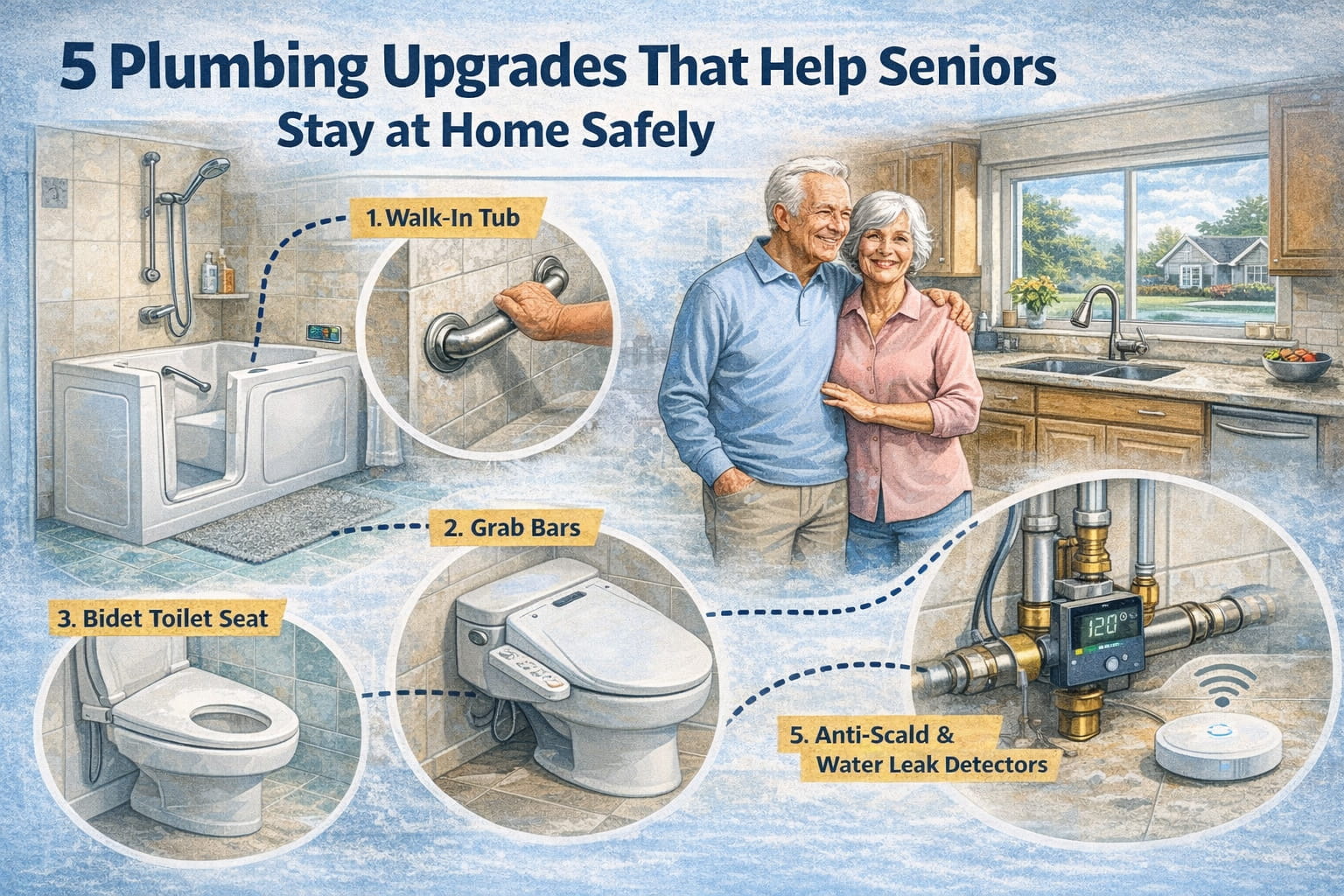
Here are five plumbing upgrades that ExpressRooter recommends as part of a comprehensive aging-in-place plan for GTA homeowners.
1. Anti-Scald Valve on Shower and Bath Fixtures
Scalding is a serious and underappreciated risk for seniors. As we age, skin becomes thinner and more sensitive to heat, and reaction time to unexpected temperature changes slows. Hot water that would cause discomfort but not injury in a younger person can cause serious burns in a senior before they can react.
An anti-scald valve — also called a thermostatic mixing valve — is installed directly on the shower or bath fixture and automatically limits the maximum water temperature regardless of how the tap is set. The device blends hot and cold water to deliver a consistent, safe temperature and prevents the sudden temperature spikes that occur when someone else in the house flushes a toilet or runs a tap.
Installation is a half-day job for a licensed plumber and makes a permanent, maintenance-free improvement to bathroom safety. We also recommend adjusting the water heater thermostat to a maximum of 120°F (49°C) — the safe temperature recommended for households with seniors or young children.
2. Comfort-Height Toilet
Standard toilets are 14 to 15 inches from floor to seat — a height that requires significant effort to lower onto and rise from, particularly for anyone with reduced leg strength, arthritis, or balance concerns. Comfort-height toilets, also called ADA-height or right-height toilets, measure 17 to 19 inches from floor to seat — approximately the same height as a standard chair.
The difference is significant. Rising from a comfort-height toilet requires considerably less lower body strength and places much less stress on knees and hips. For seniors recovering from hip or knee surgery, or those with arthritis in the lower extremities, this upgrade can be the difference between independent bathroom use and requiring assistance.
A comfort-height toilet replacement is a straightforward plumbing job completed in a few hours, and modern comfort-height models are available in a full range of styles and price points. The upgrade is permanent and adds value to the home regardless of age or mobility status.
3. Handheld Shower Head with Extended Hose
A fixed overhead shower head requires standing, steady balance, and the ability to manoeuvre under a fixed spray. For seniors with balance concerns, or those who may prefer or need to shower seated, a handheld shower head on an extended hose — typically 60 to 72 inches — provides enormously greater flexibility and safety.
The same fixture allows a caregiver to provide bathing assistance without needing to reach over the senior. It also works in combination with a fold-down shower bench, which provides a seated bathing option that dramatically reduces fall risk.
Installation involves replacing the existing fixed shower head with an adjustable slide bar and handheld unit — a simple job that costs a fraction of what a bathroom renovation would run and can be completed in under an hour.
4. Lever-Style Faucet Handles
Traditional round faucet handles and knobs require a firm grip and twisting motion that becomes increasingly difficult with arthritis, reduced hand strength, or carpal tunnel syndrome. Lever-style handles, by contrast, can be operated with a light downward push — manageable even with severely limited hand mobility.
Replacing round faucet handles with lever-style alternatives is a straightforward plumbing job and makes a meaningful daily quality-of-life improvement in every bathroom and kitchen in the home. Modern lever handles are available in finishes and styles that match virtually any existing fixture.
5. Regular Leak Detection and Pipe Inspection
Slips and falls on wet floors are among the most common serious injuries for seniors at home. A slow leak under the sink or a dripping shower connection creates persistently damp surfaces that significantly increase fall risk. Regular plumbing inspections — checking under sinks for moisture, inspecting toilet bases for instability, and reviewing any areas of floor near plumbing fixtures for signs of water damage — are a practical safety measure that doubles as property maintenance.
A plumbing safety inspection is a standard component of SPC Home Solutions’ Aging in Place Program, which coordinates plumbing, electrical, and handyman modifications across all three trades in a single coordinated visit.
SPC Home Solutions offers four Aging in Place packages covering plumbing, electrical, and handyman modifications starting at $599. Learn more and request a consultation at spchomesolutions.ca/aging-in-place or call 289-203-2441.