


The Homeowner’s Guide to Sump Pumps in Ontario
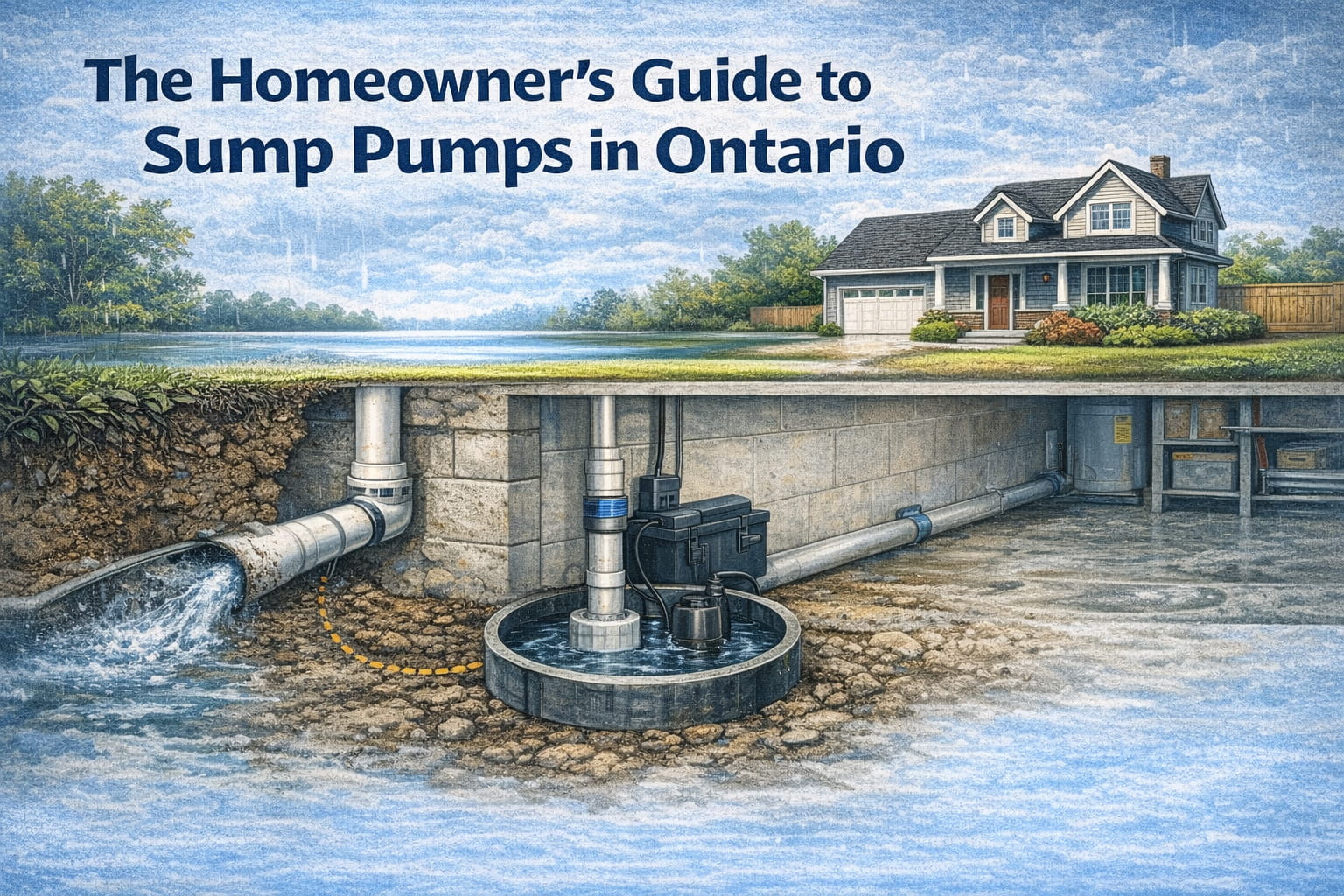
If your home has a sump pit in the basement — a cylindrical hole in the floor, typically located in a corner or utility room — you rely on a sump pump to protect your home from groundwater flooding. For many GTA homeowners, the sump pump is an appliance they rarely think about until it fails during a major rain event, at which point the consequences can be severe.
This guide covers everything you need to know about sump pumps as a GTA homeowner: how they work, how long they last, what the warning signs of failure look like, and what your options are for maximising protection.
How a Sump Pump Works
Groundwater naturally accumulates in the soil around your home’s foundation, particularly during heavy rain, snowmelt, and periods of high water table. In homes without a sump system, this groundwater can build up pressure against the foundation wall and eventually find its way inside through cracks, joints, and floor-wall intersections.
A sump pit is a below-grade collection basin that intercepts this groundwater before it can reach the level of the basement floor. The sump pump sits inside the pit and activates automatically when the water level rises to a set point — typically controlled by a float switch similar to the mechanism in a toilet tank. The pump moves the water through a discharge pipe that exits the home and directs water away from the foundation, typically to a municipal drain or dry well.
How Long Do Sump Pumps Last?
The typical service life of a residential sump pump is 7 to 10 years, though this varies significantly based on how frequently the pump runs, the quality of the unit, and maintenance history. Pumps in homes with high water tables that run frequently will wear out sooner. Pumps in drier conditions that rarely activate can last longer.
The challenge is that sump pump failure is almost always invisible until it happens. The pump sits in a dark pit, often under a cover, and gives no obvious signal that it’s approaching the end of its useful life. This is why proactive replacement — replacing a pump at 7–8 years rather than waiting for it to fail — is worth considering for GTA homeowners, particularly given the region’s heavy spring rain season.
Warning Signs Your Sump Pump May Be Failing
- The pump runs continuously without shutting off — suggests a stuck float switch or a pump that can no longer keep up with water volume
- The pump activates but water in the pit doesn’t go down — suggests a failing motor, clogged intake, or discharge pipe blockage
- Unusual grinding or rattling noises during operation — suggests worn bearings or impeller damage
- The pump doesn’t activate when the water rises in the pit — float switch failure or electrical issue
- The pump is more than 7 years old — even without symptoms, proactive testing and replacement consideration is warranted
Battery Backup Sump Pumps
The most dangerous scenario for a sump pump is one that almost every GTA homeowner faces at some point: a power outage during a major storm. Heavy rain that overwhelms your drainage system is precisely the event most likely to also take out power — leaving your primary sump pump useless at exactly the moment it’s most needed.
A battery backup sump pump is a secondary pump that activates automatically if the primary pump loses power or fails. It runs on a large rechargeable battery capable of providing hours of pumping capacity during an outage. For GTA homeowners with finished basements or basements containing mechanical systems and storage, a battery backup pump is one of the most cost-effective insurance investments available.
Sump Pump Maintenance
Annual maintenance for a sump pump is straightforward and should be done every spring before heavy rain season. The basic steps are: pour a bucket of water into the pit to confirm the pump activates correctly and fully discharges, check the discharge pipe to ensure it’s clear and directing water away from the foundation, inspect the float switch for free movement, and clean any debris from the pump intake screen.
This quick check takes less than 15 minutes and will identify most developing problems before they become failures. ExpressRooter includes sump pump testing as part of spring maintenance visits under the Home Protection Plan.
When to Call a Professional
If your sump pump fails any of the basic tests above, is exhibiting unusual sounds or behaviour, or is more than 8 years old, call ExpressRooter for an assessment. A pump that needs replacement should be replaced before heavy rain season — not after a flooding event when replacement parts and service calls are in peak demand.
ExpressRooter provides sump pump installation, testing, and replacement across the GTA. Call 416-233-2660 or book online at expressrootertoronto.com. Emergency service available 24/7.