


Plumbing Tips – Toilets
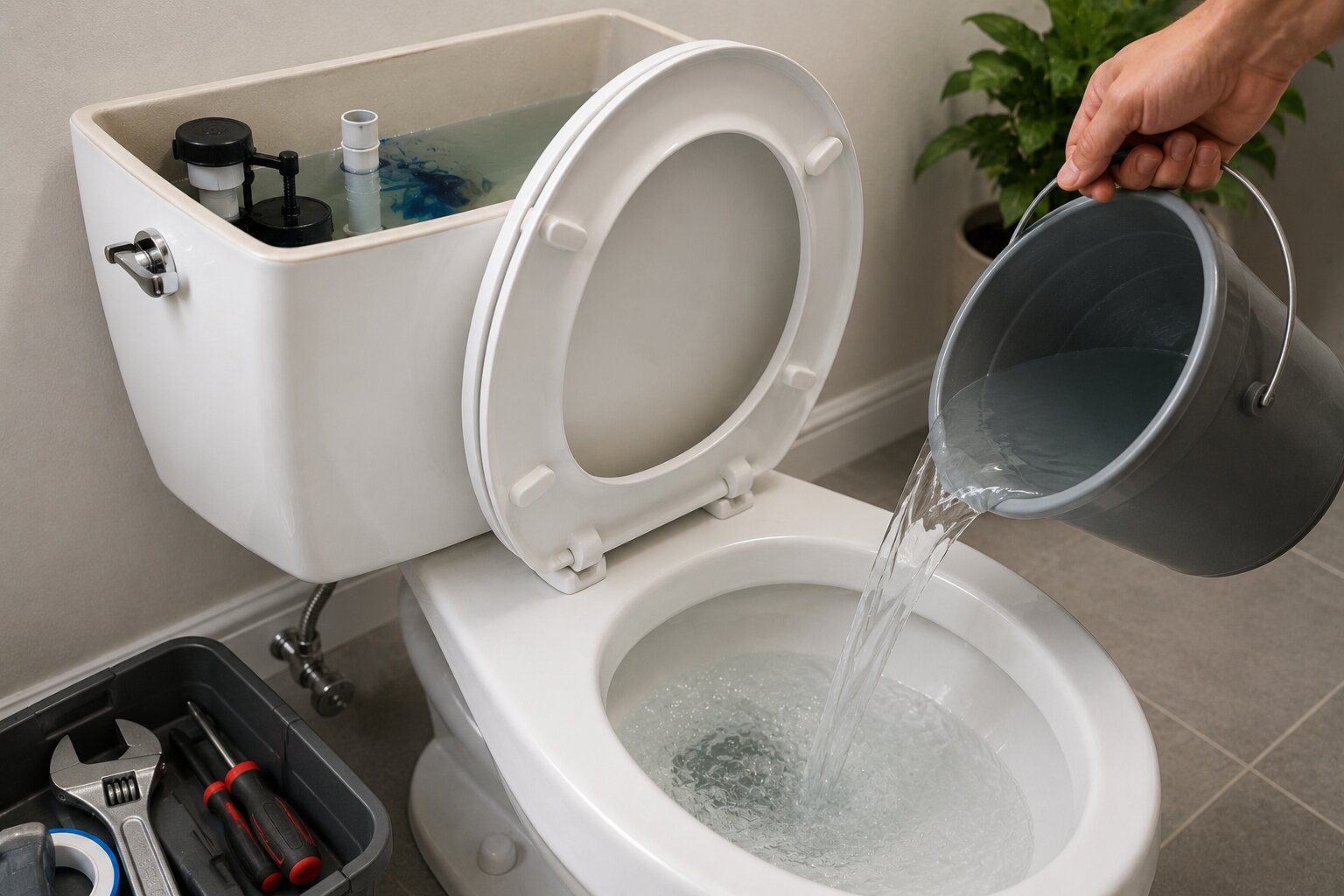
If your toilet is stopped up and if the water level is low, there is an alternative if a plunger doesn’t work.
- Fill a bucket or plastic wastebasket with warm water and pour it into the bowl from waist level or higher.
- Repeat if necessary after the water level is once again low.
Periodically check your toilets for leaks:
- Place a few drops of food coloring in the tank — not the bowl. A couple of tablespoons of instant coffee or Kool-Aid will work too.
- Check the toilet after about thirty minutes. If the water in the bowl has some of the color in it, the tank is leaking and the stopper (“flapper”) and/or flush valve seat may need to be replaced.
A properly maintained toilet can last for many years and help you avoid unexpected plumbing repairs. One of the best ways to keep your toilet in good working condition is to avoid flushing anything other than toilet paper and human waste. Items such as wipes, paper towels, cotton swabs, and hygiene products can easily clog your plumbing system.
It is also a good idea to inspect your toilet regularly for signs of leaks, loose parts, or unusual noises. If your toilet flushes slowly, runs continuously, or requires multiple flushes, it may indicate a developing plumbing issue that should be addressed before it becomes more serious.
Cleaning your toilet and tank regularly helps prevent mineral buildup that can affect flushing performance. Replacing worn components such as the flapper or fill valve when needed can also improve efficiency and reduce water waste.
If you continue to experience recurring clogs, leaks, or overflowing toilets despite routine maintenance, it is best to contact a professional plumber. Early repairs can prevent costly damage and keep your plumbing system operating smoothly.