


Plumbing Tips – Frozen Pipes
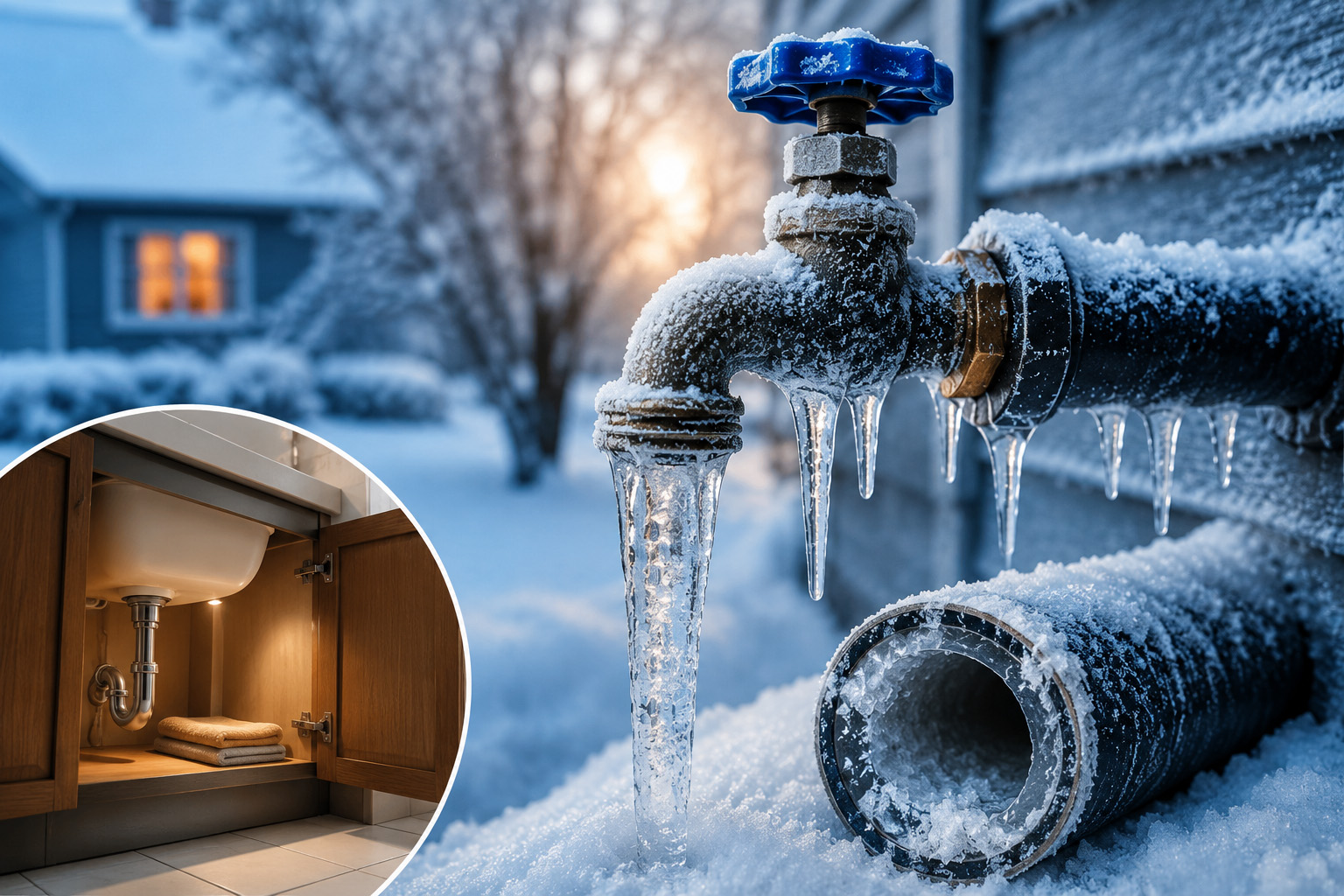
- Don’t let your outdoor faucets freeze up in the winter.
- Unattach your garden hoses before freezing temperatures arrive in the fall.
- Then close the shut-off valve on the pipe(s) which lead to your outdoor faucet(s).
- Then open the outdoor faucets so that any residual water can drain.
- If your indoor faucets sometimes freeze in very cold weather:
- Try leaving the cabinet doors under the faucets open so that they can get a bit more heat.
- In extreme cases let the water trickle very slowly into the sink.
- Insulate water pipes which may be exposed to freezing temperatures or wind. Water pipes which are not being used should be drained for the winter in areas where there may be severely cold weather.
- If there is plumbing in your garage, be sure to keep your garage door closed when it is very cold. Pipes in unheated garages or basements should be insulated.
Why Frozen Pipes Are a Serious Problem
Frozen pipes are more than just an inconvenience—they can become one of the most expensive plumbing emergencies a homeowner faces during winter. As temperatures drop below freezing, the water inside your pipes can freeze and expand. This expansion creates tremendous pressure inside the pipe, often causing it to crack or burst.
Even a small crack can release hundreds of litres of water into your home, damaging drywall, flooring, insulation, furniture, and personal belongings. Taking preventative measures before winter arrives can save you thousands of dollars in repair costs.
Which Pipes Are Most Likely to Freeze?
Some plumbing pipes are much more vulnerable than others. Pay special attention to:
- Outdoor hose bibs and garden faucets
- Pipes located in unheated basements
- Garage plumbing
- Crawl spaces
- Attics
- Pipes installed along exterior walls
- Kitchen sink pipes on outside-facing walls
If these areas are not properly insulated, they can freeze much faster than pipes located inside heated parts of the home.
Signs Your Pipes May Be Frozen
Recognizing the warning signs early can help prevent a burst pipe.
Watch for:
- Little or no water coming from faucets
- Frost visible on exposed pipes
- Strange banging or whistling sounds
- Unusual plumbing odors
- Water pressure suddenly dropping
- Ice forming around outdoor faucets
If you notice any of these symptoms, take action immediately before the pipe bursts.